The Future of Pipeline Infrastructure in Nigeria: From Generalist to Specialist

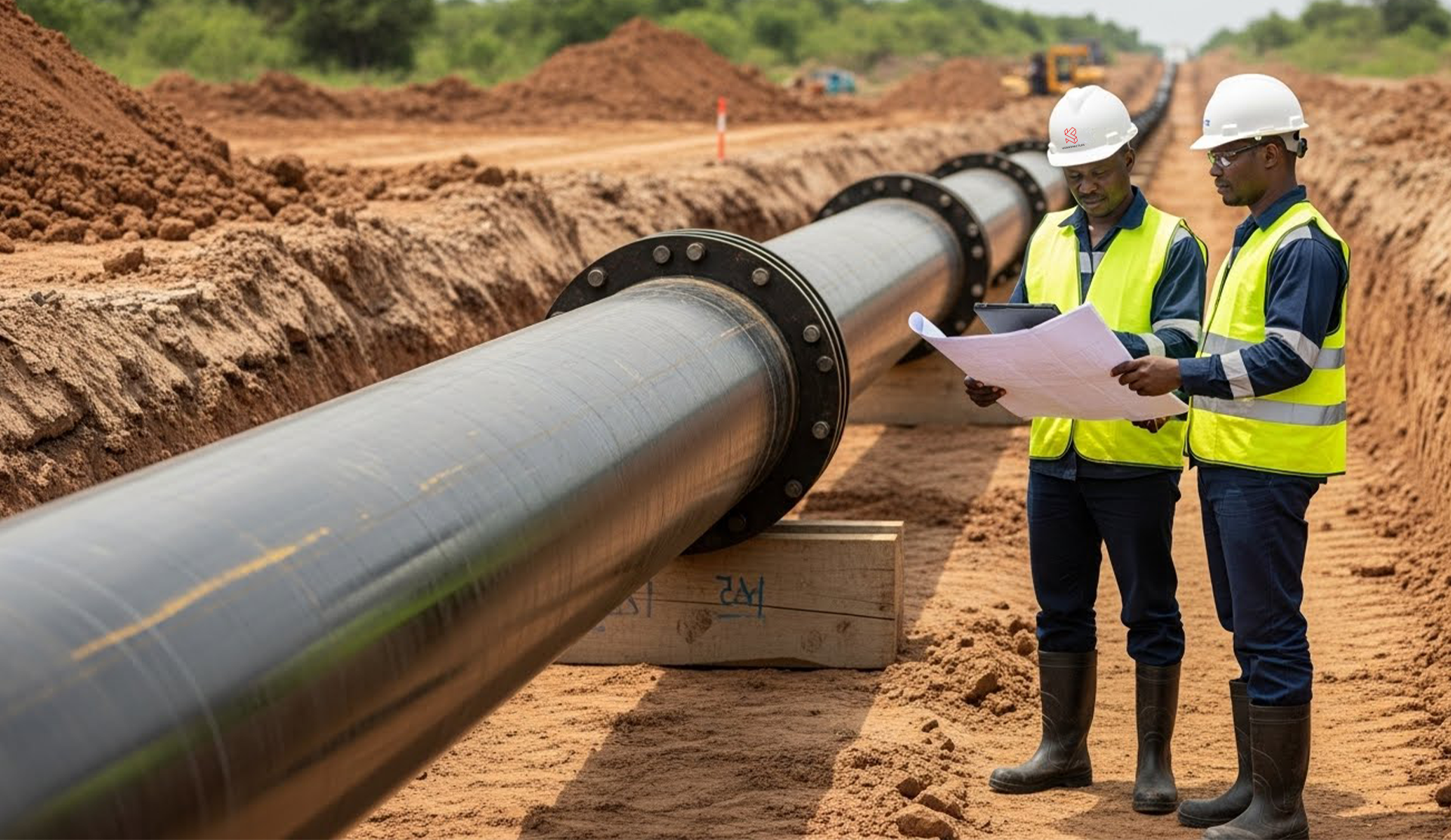
Nigeria’s pipeline system is often presented as an impressive statistic: more than 5,000 kilometres of petroleum product pipelines spanning the country, alongside approximately 2,500kilometres of gas pipelines linking industrial clusters and power plants (Punch, 2024; Independent, 2024). On paper, this appears substantial.
But pipeline length is not the core issue.
The real challenge is execution — whether Nigeria’s infrastructure is built, maintained, and operated with the technical depth required to drive genuine economic transformation. Until that gap is addressed, adding more kilometres will not materially changeoutcomes.
Length Is Not Leverage
Nigeria’s network traversesoil fields, depots, and power hubs, connecting most geopolitical zones.Projects such as the Ajaokuta–Kaduna–Kano (AKK) Gas Pipeline and theObiafu–Obrikom–Oben (OB3) Gas Pipeline are designed to deepen domestic gasintegration and expand supply corridors (Western Post, 2024).
Yet operational realities often tell a different story. Fuel trucks continue to dominate distribution when pipelines are offline. Supply disruptions persist. Maintenance backlogsgrow. Vandalism and integrity concerns undermine reliability.
In effect, the country mayhave breadth, but it lacks depth.
A significant portion of thereported 5,000 kilometres is ageing infrastructure. Not all segments operate at optimal efficiency. Meanwhile, Nigeria’s gas pipeline network — though strategically vital for power generation and industrialisation — remains limitedrelative to global peers (Western Post, 2024). Infrastructure shouldfunction as an economic multiplier. When it does not, headline figures offeronly superficial reassurance.
Why Specialisation Must Come First
If execution is theconstraint, capability is the remedy.
For years, many indigenous engineering, procurement, and construction (EPC) firms have operated under a generalist model: bidding widely, promising broadly, and competing primarily onvolume. In pipeline infrastructure, this approach often creates structural weaknesses:·
-Capital spread too thinly across multiple verticals·
-Increased reputational risk arising from inconsistent delivery·
-Direct competition with entrenched Tier 1players without a differentiated value proposition
Pipeline development is notgeneric construction. It demands specialised expertise in route engineering,welding standards, commissioning, integrity management, and operationaloptimisation. These are distinct technical disciplines requiring sustained focus.
As Nigeria advances into what policymakers describe as the “Decade of Gas,” the objective is not merely tolay additional pipelines. It is to:·
-Connect gas hubs efficiently to power grids·
-Reduce logistics inefficiencies·
-Lower transportation costs·
-Increase domestic energy utilisation
These outcomes requirepredictable execution, stringent safety standards, and long-term assetintegrity. Specialist firms are structurally better positioned to deliver them.
The Cost of Breadth Without Discipline
Nigeria’s pipeline landscape presents significant opportunity: new infrastructure to be constructed andthousands of kilometres to be rehabilitated or modernised. However, opportunities without strategic focus often results in inefficiency.
-The next generation ofpipeline developers must prioritise:·
-Focused capability development over expansive positioning·
-Niche mastery rather than surface-level competence·
-Strategic partnerships that enhance delivery credibility·
-Branding anchored in demonstrable expertise, not aspiration
In competitive tenders, risk mitigation and proven performance outweigh rhetoric. Firms capable of demonstrating excellence across the pipeline value chain — from constructionand commissioning to integrity management — will consistently differentiate themselves.
The Strategic Imperative
Nigeria does not requiremore impressive statistics. It requires infrastructure that performs reliably. Pipeline length is a metric. Execution is leverage.
At KCC, we believe pipeline infrastructure demands specialist capability across engineering,construction, and asset integrity. Delivering reliable infrastructure requires focused expertise and disciplined execution across the pipeline value chain.In the effort to unlock Nigeria’s energy potential, specialisation is not optional. It is strategic discipline — and it will determine which firms shape the future of thecountry’s pipeline economy.
(Written by Olubukola Osibogun)
References
Independent (2024). “NNPCLWill Replace 5,000km Pipelines in Three Years.” Independent Nigeria.
Punch (2024). “NNPCL toReplace 5,000km Pipelines in Three Years – Kyari.” The Punch Newspaper.
Western Post (2024). “NigeriaRequires $22bn to Expand Gas Pipeline Network, Says NNPCL.” Western PostNigeria.